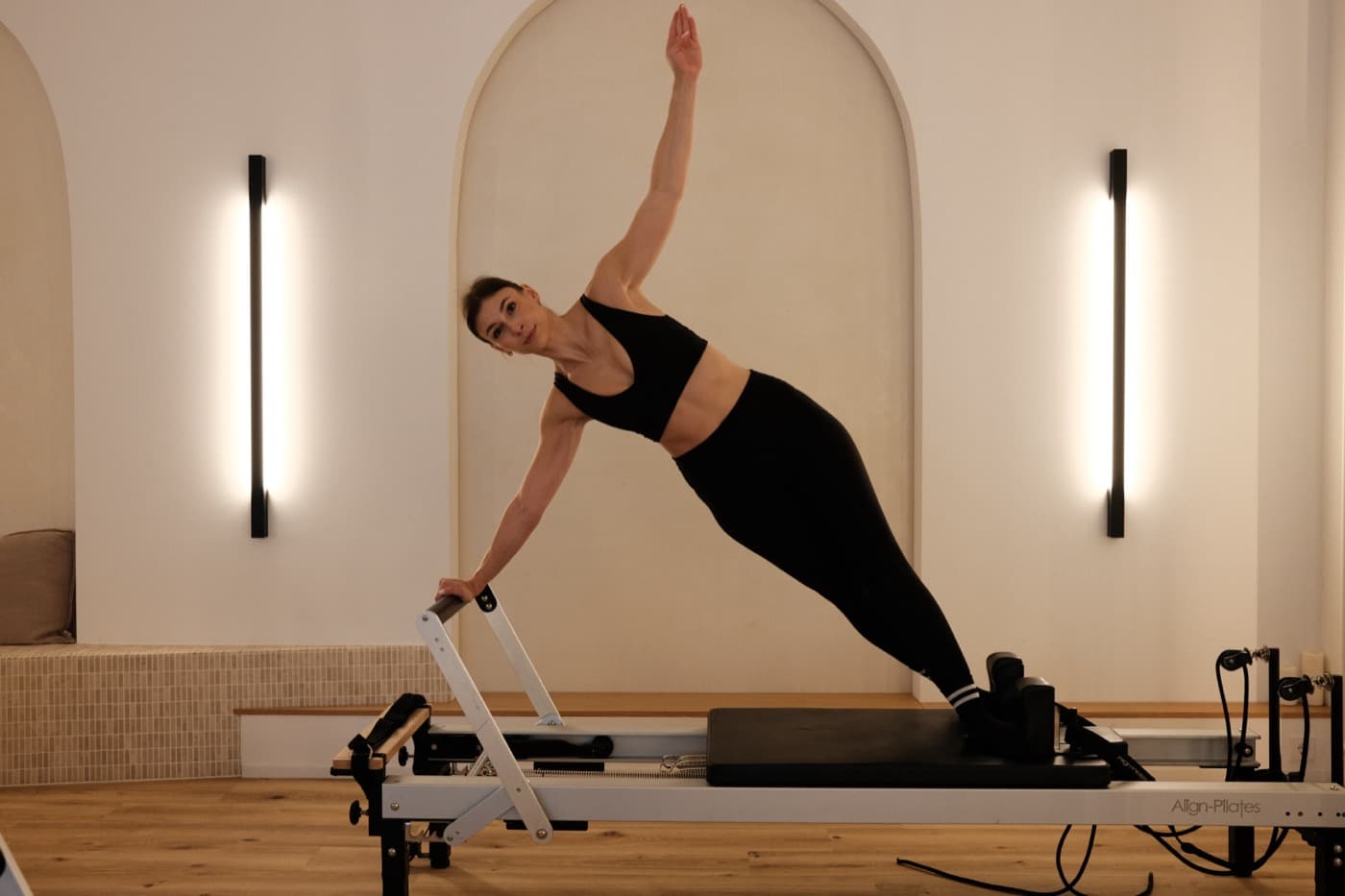
A Pilates class is more than a sequence of exercises. It is a thoughtfully crafted experience — with a beginning, a middle, and an end that leaves both body and mind integrated. Once you have internalized this principle, every class becomes a small work of art.
The Five Phases of a Class
Whether 45 or 75 minutes: every class should move through these five phases. Not as a rigid structure, but as an inner logic.
1. Arrival (5–8 min.)
The first minutes belong to preparation. Breath work, body awareness, activating the deep stabilizers. Your participants arrive from daily life — give them time to settle before you challenge them.
2. Warm-up & Mobility (10–15 min.)
Now you wake the spine. Articulations, gentle rotations, gradual mobilization of the major joints. The warm-up prepares the body functionally — and gives you as the instructor valuable information about your group's state.
3. Main Work (20–30 min.)
This is where the real work happens. Choose a clear class theme and build exercises progressively on each other. Strength, coordination, balance — depending on goal and level.
"A class without a theme is like a recipe without a main ingredient."
4. Synthesis (5–10 min.)
The synthesis phase connects everything. More complex movement sequences, combinations — here you see whether the previous phases have taken hold.
5. Cool-down & Integration (8–10 min.)
No abrupt ending. Slow unwinding, deep stretching, conscious awareness of the changes. This phase is just as important as the main work.
The Class Theme as a Red Thread
Choose a clear theme for each class: hip opening, rotational stability, shoulder integration. This theme runs through all phases — from the first breath to the final relaxation.
- Theme determines exercise selection
- Theme determines cueing focus
- Theme determines progressions and regressions
When you work with a theme, your classes feel coherent — and your participants sense the difference, even if they cannot name it.
Time Management Without Clock-Watching
Good instructors know their class so well that they feel the time. This comes with experience — and with preparation. Write your class plan down, even if you do not follow it exactly. The process of writing sharpens your inner timing.
Pilates Plans delivers a fully structured plan every week — with a clear theme, phase timing, and progression ideas. So you can focus on what truly matters: your group.